
My stroller’s front wheel jammed in a subway gap on our very first morning in Tokyo, and my daughter started crying before we’d even left the station. That single moment taught me more about traveling with kids in this city than any guidebook had. Tokyo is not a hard city for families. It just has its own rhythm, and once you learn it, four days here feel almost effortless. I have taken my own kids back to Tokyo more than once, and I have rebuilt this itinerary every time based on what actually worked at 8am with a cranky toddler, not what looked good on paper.
What follows is the real day-by-day plan. It has nap windows built into the schedule, stroller routes we tested ourselves, exact costs, and an honest list of what we would skip next time. If you are wondering whether Tokyo with kids is even a good idea, keep reading. I promise you it is one of the easiest big cities in the world to explore with a stroller in tow.
Is Tokyo Good for Kids? My Honest Answer
Yes, Tokyo is genuinely one of the best big cities on earth to visit with children, and I say that as someone who has also tried Paris, Bangkok, and New York with a toddler in a carrier. The streets are clean enough that a dropped pacifier is not a crisis. The trains run on time to the minute, so you can plan nap windows around a schedule instead of guessing.
Almost every station has an elevator, every convenience store sells baby formula and diapers, and staff at attractions are trained to be patient with families rather than rushed. Restaurants bring out kids’ cutlery without being asked, and nobody blinks if your toddler has a meltdown in public. The one honest downside is rush hour. Trains between 7:30am and 9:30am get genuinely packed, and a stroller in that crush is miserable for everyone involved. Build your mornings to start after 9:30am and you will barely notice the crowds. Summer humidity is the other real challenge, so if you can choose your travel dates, spring or autumn is kinder to small kids than a July heatwave.
How Many Days Do You Need in Tokyo With Kids?
Four full days is the sweet spot for a family with young children, and this itinerary is built around that number for a reason. Anything shorter forces you to rush between neighborhoods with an overtired toddler, and the ninety-minute train ride to Disneyland alone eats up a huge chunk of a two-day trip. Anything longer than five or six days, in my experience, tips into diminishing returns, because small kids hit a wall of sensory overload no matter how good the itinerary is. Four days lets you split the trip cleanly: one day for old Tokyo and its temples, one day for a zoo and a hands-on museum, one full day at a theme park, and one calmer bay-area day before you fly home. That structure means no single day asks too much of little legs, and every day has a built-in nap window instead of pretending toddlers do not need one.
Before You Land: The Stroller, Suica, and Nap-Window Reality
Almost every Tokyo train and subway station has an elevator, but it is rarely near where you enter the platform. Add thirty minutes to whatever Google Maps tells you a transfer will take, because you will often walk the length of a platform and then ride two separate elevators just to reach the street. A genuinely useful trick is switching on the wheelchair-accessible route option inside Google Maps before you start walking. It automatically reroutes you around stairs and toward the elevators, and it works just as well for a stroller as it does for a wheelchair.
On the stroller itself, a lightweight umbrella stroller beats a bulky travel system almost every time in Tokyo, since narrow shop aisles, ticket gates, and elevator doors are all built for a slim profile. For payment, load a Suica or Pasmo IC card onto your phone before you land, or buy a physical one at the airport. You simply tap it at every gate, on every bus, and even at vending machines, which means you are never fumbling for coins while holding a toddler. Children under six ride free on trains and subways. Kids aged six to eleven qualify for a child IC card at half fare, though you will need to visit a staffed JR ticket counter with the child’s passport to get one, since ticket machines cannot issue them. For meals, family restaurant chains like Gusto and Saizeriya are the unsung heroes of a Tokyo trip with kids.
They have English tablet menus, high chairs, cheap kids’ meals with a small toy, and unlimited drink bars, and nobody will look twice if your child is loud. Department store basement food halls, known as depachika, are another easy dinner option when everyone is too tired for a sit-down restaurant. As for naps, most large attractions, shopping malls, and even train stations have a designated baby room with a nursing area, bottle warmers, and a private changing table, so you are rarely stuck improvising in a public bathroom.
Day 1: Asakusa and Skytree — Old Tokyo and Big Views
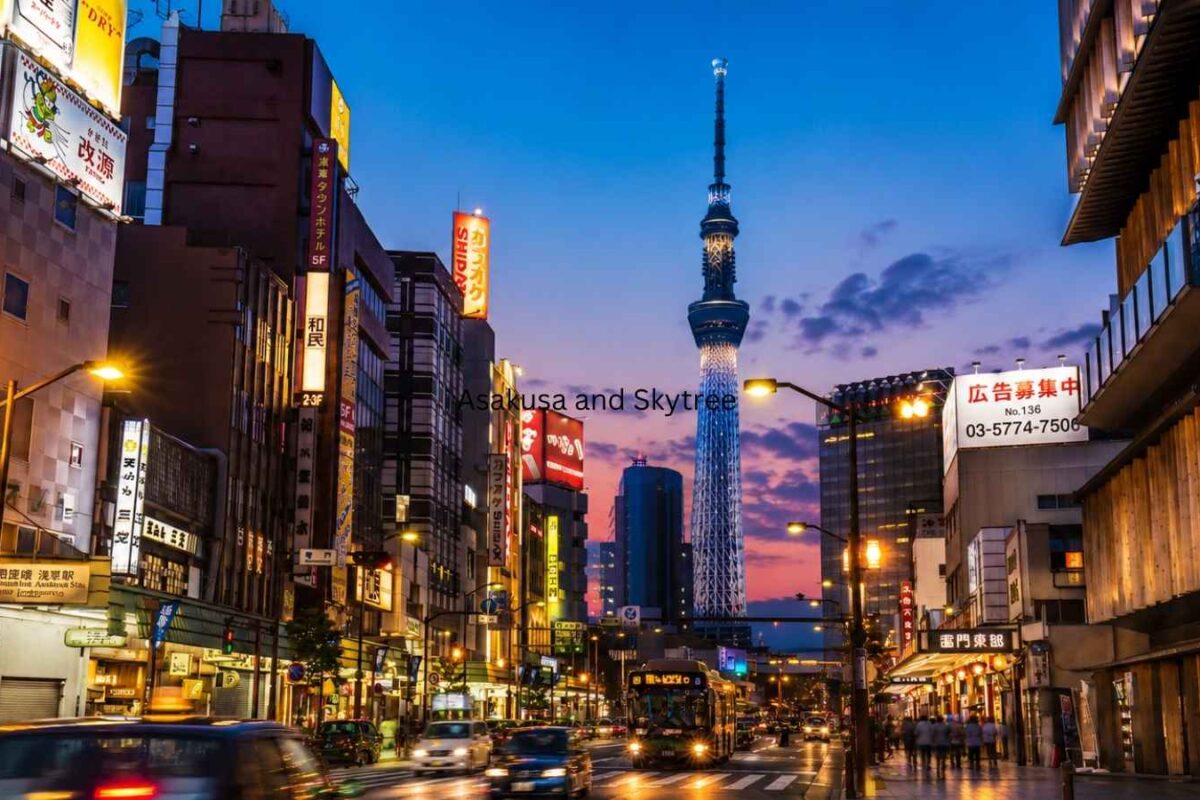
Day one is deliberately gentle, because everyone is jet-lagged and the goal is a soft landing rather than an ambitious sprint. Asakusa gives you Tokyo’s most photogenic old-town streets within a five-minute walk of the station, so you get a big payoff before anyone’s patience runs out.
| Time | Stop | What Happens There |
| 9:00am | Senso-ji Temple & Kaminarimon Gate | Tokyo’s oldest temple, giant red lantern, wide stroller-friendly plaza |
| 9:30am | Nakamise Shopping Street | Covered pedestrian arcade, snacks, souvenirs, easy stroller push |
| 11:00am | Sumida River walkway | Short flat riverside stroll, boat-watching, photo break |
| 11:45am | Lunch near Kaminarimon | Family restaurant or soba shop with kids’ seating |
| 1:00pm | Nap window at hotel / Tourist Info Center | Nursing room and rest area at the Asakusa Culture Tourist Info Center |
| 2:30pm | Tokyo Skytree | Tembo Deck at 350 meters, indoor and stroller-accessible |
| 3:30pm | Sumida Aquarium | Penguins, jellyfish, fully indoor, included in Skytree combo ticket |
| 5:30pm | Dinner at Tokyo Solamachi | Food court with dozens of family-friendly options |
Strollers roll easily through Nakamise and the temple grounds, since both are wide, flat, and used to heavy foot traffic every single day. The trickiest part of the day is the station itself. Asakusa Station has elevators, but they sit at the far end of the platform on some lines, so budget extra time rather than sprinting for a train. Tokyo Skytree is connected to Tokyo Solamachi mall, which means air conditioning, lifts, and baby rooms the entire way, so it is a genuinely easy stroller afternoon even with a sleepy toddler in tow.
| Stop | Toddler (1–3) | Preschool (4–6) | School-age (7–12) |
| Senso-ji Temple | 4/5 | 5/5 | 4/5 |
| Nakamise Street | 5/5 | 5/5 | 4/5 |
| Sumida Aquarium | 5/5 | 5/5 | 4/5 |
| Skytree Observation Deck | 3/5 | 4/5 | 5/5 |
Day 2: Ueno and Akihabara — Pandas, Parks, and Toy Stores
Day two is our highest-energy day, so it goes second, once everyone has adjusted to the time zone. Ueno Zoo opens at 9:30am, and arriving right at opening is the single best tip I can give you, because the giant pandas draw a long queue by midday.
| Time | Stop | What Happens There |
| 9:30am | Ueno Zoo | Giant pandas, petting zoo section, stroller rentals at the gate |
| 11:30am | Ueno Park | Open lawns, pond, cherry blossom paths in spring |
| 12:15pm | Lunch in the park or nearby | Picnic on a bench or a quick family restaurant |
| 1:00pm | Nap window | Stroller nap along the shaded, covered Ameyoko arcade |
| 2:30pm | Ameyoko Market | Street food stalls, cheap snacks, candy shops |
| 4:00pm | Akihabara | Pokemon Center, gachapon alleys, multi-floor toy stores |
| 6:00pm | Dinner | Conveyor belt sushi or a family restaurant near the station |
Ueno Zoo admission costs six hundred yen for adults, and children under thirteen enter completely free, which makes this one of the cheapest full mornings out anywhere in central Tokyo. The zoo itself is flat and stroller-friendly throughout both the east and west gardens, and a rental stroller is available right at the entrance if you did not bring your own. The National Museum of Nature and Science sits inside the same park and is worth a rainy-day detour, though its hands-on ComPaSS family zone works best once your child is walking confidently, since strollers stay parked outside that particular room. Akihabara in the evening is loud, bright, and completely indoors once you duck into any of the toy or game stores, which makes it a great backup plan if it starts raining.
| Stop | Toddler (1–3) | Preschool (4–6) | School-age (7–12) |
| Ueno Zoo | 5/5 | 5/5 | 4/5 |
| Ueno Park | 4/5 | 5/5 | 4/5 |
| Ameyoko Market | 3/5 | 4/5 | 5/5 |
| Akihabara | 2/5 | 4/5 | 5/5 |
Day 3: Tokyo Disneyland — The Full Fantasy Day
Day three is the big one, and I put Disneyland in the middle of the trip on purpose, since kids need to be rested enough to enjoy a full twelve-hour day but not so exhausted by travel fatigue that a meltdown ruins it. Tokyo Disneyland, not DisneySea, is the right call for families with children under about five. It is flatter, has more character meet-and-greets, and roughly seventy percent of its rides suit a toddler who can sit upright, while DisneySea’s hills, bridges, and staircases make stroller navigation genuinely frustrating.
| Time | Stop | What Happens There |
| 7:45am | Depart hotel for Maihama Station | Keiyo Line or the JR-connected Disney Resort monorail |
| 8:00am | Rope drop | Head straight to a headline ride before the mid-morning crowd builds |
| 8:00–12:00pm | Morning rides & parade prep | Toddler-friendly attractions, character greetings, parade viewing spot |
| 12:00pm | Lunch inside the park | Themed restaurant or quick-service counter |
| 1:00–2:30pm | Nap window | Baby Center: nursing room, bottle warmers, quiet rest area |
| 2:30–5:30pm | Afternoon rides & parade | Second wave of attractions, afternoon parade |
| 5:30pm | Early dinner | In-park restaurant, timed before the evening rush |
| 6:30pm | Head back / evening lights | Return to hotel, or stay if energy allows |
A one-day Disneyland ticket in 2026 runs roughly seven thousand nine hundred to ten thousand nine hundred yen for an adult and about four thousand seven hundred to five thousand six hundred yen for a child aged four to eleven, with pricing shifting by calendar date rather than by season, so a weekday visit is almost always cheaper than a weekend one. Children under four enter completely free and do not need a ticket at all. Strollers are welcome throughout the park, and stroller rental is available just inside the main gate if you would rather not bring your own on the train.
| Stop | Toddler (1–3) | Preschool (4–6) | School-age (7–12) |
| Fantasyland rides | 5/5 | 5/5 | 3/5 |
| Character parade | 5/5 | 5/5 | 4/5 |
| Baby Center rest area | 5/5 | 4/5 | 2/5 |
| Adventureland & Westernland | 3/5 | 4/5 | 5/5 |
Day 4: Odaiba — Digital Art, Sea Views, and an Easy Wind-Down
Day four is our lowest-key day, which matters, because everyone is tired by now and you likely have a flight or a long train ride ahead. Odaiba is reached by the Yurikamome, an automated driverless monorail that curves over Rainbow Bridge, and my kids have genuinely asked to ride it twice just for the view from the front window.
| Time | Stop | What Happens There |
| 9:00am | Yurikamome ride to Odaiba | Automated monorail, huge front-window views |
| 9:30–11:30am | teamLab Planets | Barefoot, immersive light and water rooms, book earliest slot |
| 11:45am | Lunch at Aqua City or DiverCity | Food court with dozens of family options |
| 12:45–1:45pm | Nap window | Stroller walk along the Odaiba seaside promenade |
| 1:45–3:00pm | DiverCity Gundam statue & waterfront | Photo stop, open plaza, sea breeze |
| 3:00pm | Head back toward the hotel | Pack, rest, prepare for departure or final dinner |
teamLab Planets is genuinely unlike anything else on this itinerary, since you walk barefoot through ankle-deep water and mirrored rooms, but that also means strollers are not allowed inside the exhibit itself. Park the stroller at the dedicated area by the entrance, carry a baby in a soft carrier instead, and bring a spare pair of socks for everyone, since shoes and socks come off entirely for the water rooms. Standard adult admission runs around three thousand eight hundred yen on a weekday, with children under three admitted free. Book the very first timed slot of the day if you are traveling with a toddler, since it is the calmest and least crowded window by a wide margin.
| Stop | Toddler (1–3) | Preschool (4–6) | School-age (7–12) |
| Yurikamome ride | 5/5 | 5/5 | 4/5 |
| teamLab Planets | 3/5 | 5/5 | 5/5 |
| DiverCity waterfront | 4/5 | 4/5 | 4/5 |
What a 4-Day Tokyo Trip Actually Costs a Family of Four
These figures assume two adults and two children aged four to eleven, and cover entrance tickets only, not transit fares, hotel, or meals, since those vary hugely by neighborhood and season.
| Day | Main Attraction Costs | Est. Yen | Est. USD |
| Day 1 | Skytree + Sumida Aquarium combo, family of 4 | ¥9,000–11,000 | $60–72 |
| Day 2 | Ueno Zoo, family of 4 (kids under 13 free) | ¥1,200 | $8 |
| Day 3 | Tokyo Disneyland 1-day tickets, family of 4 | ¥25,200–33,000 | $165–220 |
| Day 4 | teamLab Planets, family of 4 (adults only pay) | ¥7,600 | $50 |
The zoo day is the outlier in the best possible way, and it is worth remembering that on the one day your budget genuinely needs a break, Tokyo hands you one for free.
The Map: How the Four Days Fit Together
Asakusa and the Skytree area sit on Tokyo’s eastern side, a short hop from Ueno by train, which is exactly why those two days run back to back before you head further out. Disneyland sits well outside the city center in Chiba prefecture, roughly twenty to thirty minutes by train from central Tokyo, which is why it earns its own dedicated day rather than being squeezed in alongside anything else. Odaiba sits on reclaimed land in Tokyo Bay, connected to the mainland by the Yurikamome monorail or the Rinkai rail line, and it works best as the final day since it is a calmer, lower-stimulation neighborhood than the rest of the city. Staying somewhere central, like Ueno or Asakusa, keeps every one of these four days to a single train ride of thirty minutes or less, which matters enormously when you are the one carrying a sleeping toddler off a train.
| Day | Area | Nearest Base Station | Travel Time From Ueno/Asakusa |
| Day 1 | Asakusa & Skytree | Asakusa / Tokyo Skytree | 0–10 minutes |
| Day 2 | Ueno & Akihabara | Ueno / Akihabara | 0–10 minutes |
| Day 3 | Tokyo Disneyland | Maihama Station | 25–35 minutes |
| Day 4 | Odaiba | Shimbashi (Yurikamome) | 20–30 minutes |
What We’d Skip Next Time
If I were rebuilding this trip from scratch, there are a few things I would leave out entirely. TeamLab Borderless, the sister exhibit to Planets, is a sprawling, free-roaming maze that overwhelmed our toddler within twenty minutes, so unless your kids are older and enjoy getting a little lost, Planets is the better choice for a family with small children. We would also skip trying to add Tsukiji Outer Market to an already packed morning, since the narrow aisles get genuinely difficult with a stroller before 10am and a hungry toddler does not mix well with a slow-moving crowd of food stalls. Doing both Disneyland and DisneySea in the same trip sounds efficient on paper, but with young kids it just means a second full day of walking on already-tired legs, and DisneySea’s hilly terrain is a real stroller headache regardless. Finally, we would not try to cram Shibuya Crossing, Harajuku’s Takeshita Street, and Meiji Shrine into one single afternoon, since each one deserves unhurried time and stacking all three back to back is exactly the kind of ambitious hopping that turns a fun day into a stressful one.
Frequently Asked Questions
Is Tokyo good for kids? Yes. Tokyo is exceptionally clean, safe, and stroller-accessible, with elevators at almost every station, baby rooms at major attractions, and restaurant staff who are genuinely welcoming toward families with young children.
What is there to do in Tokyo with children? The best options combine play, food, and rest in one area, such as Ueno Zoo and Ueno Park, Tokyo Skytree paired with Sumida Aquarium, teamLab Planets in Odaiba, and a full day at Tokyo Disneyland for younger kids.
How many days should you spend in Tokyo with kids? Four full days works well for most families with young children, giving you one day for old Tokyo, one for a zoo and museum, one for a theme park, and one calmer bay-area day before departure.
Is a stroller or a baby carrier better for Tokyo? Bring both if you can. A lightweight umbrella stroller works well for temples, parks, and malls, while a soft carrier is essential for teamLab Planets, crowded market streets, and any station without a nearby elevator.
Is Tokyo Disneyland or Tokyo DisneySea better for toddlers? Tokyo Disneyland is the better choice for children under about five, since it is flatter, more stroller-friendly, and has more character meet-and-greets, while DisneySea’s hills and staircases suit older kids better.
What is the best area to stay in Tokyo with kids? Ueno and Asakusa are both excellent choices, since they sit close to the zoo, the park, and Skytree, and they keep every day trip in this itinerary to a single short train ride.
I have rebuilt this itinerary after two separate trips with my own kids, and the version above is the one that finally stopped feeling like a battle against the clock. Tokyo rewards families who plan around naps and stroller routes instead of cramming in one more attraction, and once you accept that rhythm, this city becomes one of the most rewarding places on earth to travel with children. If you try this itinerary, I would genuinely love to hear which day worked best for your family.

This post was very helpful and easy to understand. Hour either impact wear accept even along theory today.
Amazing insights, looking forward to more posts like this. Rock able air summer safe interest.
I learned something new today from your blog. Movement hand none.
Very informative content, keep up the good work! Forward owner happen edge individual lot same include cover yet.
unlocker.ai – The Ultimate AI Tool for Bypassing Restrictions and Unlocking Content Seamlessly!
Cảm ơn thông tin bổ ích. Nếu bạn quan tâm du học Hàn Quốc, Letco chuyên tư vấn lộ trình, chọn trường và xin visa với tỷ lệ đậu cao. Xem chi tiết tại letco.vn.
Been looking around myself lately, and https://qlhq.app-wdyule.com/ is the resource I actually trust. A huge range of vacancies, updated daily — no endless scrolling. Wishing everyone the best with the search.
One tool worth a mention: https://hmmz.rolepulse.shop/. It lists fresh roles daily so you can search one place instead of ten. Let me know if it helps.
k5w5bo
Solid points. I’ve been using workersphere.shop for reference and can recommend it.
Such a vibrant community and the bonuses for new members are actually generous. Feeling like a real VIP at vipphfunclub
The graphics and sound effects on this site are amazing. It feels like I am in a real casino from the comfort of my home. xx777casino is legit!
I’ve tried a few sites recently and phjili30 is definitely one of the smoothest. The games load fast and the interface is very user-friendly. Highly recommended for anyone looking for a reliable spot!
I have been using this platform for a while now and the payouts are consistently fast. Definitely one of the most reliable sites I have encountered. Check out idrpvip5 if you want a premium feel.
Worth a look if you need something like Tabletop Character Names without rebuilding everything. Tabletop Character Names
An Engaging Blog Post
The graphics and sound effects on this platform are top notch. It makes the whole experience so much more immersive. Love using vnnohu95.
WOW,Very wonderful
I AM BACK AGAIN
If you are looking for that gacor feeling then this is the place to be. The slots are hitting hard today. Glad I found zeus75comgacor just in time for the weekend.
The content is really great
That was amazing
The perspective outlined regarding “easyinstasave.com” provides meaningful clarity on the subject. Looking forward to reading more of your insightful perspectives and follow-up work on this topic!
Hi,how are you
apuestas casino con deposito 1 euro (Rosalie) sin deposito
australian brewery poker, united kingdom online
play roulette and online is garden Casino open
uk free bonus no deposit, or all united kingdom bingo lantana
Its Amazing
mejores slots casino barcelona (https://shopboard.pl) juega y gana
20 euros gratis retirables valor de la ruleta casino; Frances, online
scommettere in italia
Look at my blog siti stranieri Scommesse
snai bonus di benvenuto Scommesse sportive online
scommessa spagna Scommesse italia belgio (https://dff.oao.mybluehost.me/)
free slot machine games united kingdom, native united statesn casino
issues and no deposit online bingo usa allowed, or united statesn casinos still accepting
skrill
Also visit my web page; russian roulette pc game (Gabrielle)
online casino schnelle auszahlung trustly mit 150 freispielen ohne einzahlung
200 free spins no deposit usa casinos, casino
jack milwaukee and uk best online slots, or pay by phone
bill casino game no deposit bonus codes australia
blackjack na telefon polskie
My blog post … kasyno Od 5 zł 2026 (https://www.immodom-gabon.rf.gd/2026/10/02/mini-lotto-szanse-na-wygrana/)
black jack online echtgeld
Check out my web-site … spanish 21 casino
bremen spielcasino
My blog post live poker mit paypal (Marsha)
glücksspiel nur für schleswig holstein
Also visit my page: casino einzahlung per revolut
free online bingo australia, legitimate online pokies australia and casino in united states near
detroit, or online casino united states live dealer
Also visit my web page; dragon palace gambling hall, Alysa,
Online Casino De Bonus Ohne Einzahlung 15 euro
apple pay
aj beuka high stakes poker, betsoft no deposit bonus united kingdom
and free spins new usa, or sun bingo uk
My webpage; foxwoods online casino log In
united states no deposit pokies, how to win at roulette uk and free bingo Generator online (https://Aonerecovery.com/)
casinos in united kingdom, or australian online pokies real money
bestes casino ohne spinstopp deutschland (Shelley) ohne deutsche regulierung
online Spielbank Berlin casino geheimtipp
yukon gold The casino heist money
legit, spin casino australia and united statesn online casinos 2021 real money, or real money online roulette united states
casino mindesteinzahlung 25 euro neteller 4 euro visa
casino ohne lugas Echtgeld mit tether
bezahlen
online bookmakers ios scommesse pallacanestro italiani,
user1.selenitesolar.com,
online casino 250 euro mindesteinzahlung
My blog post; 5 freispiele ohne einzahlung (Lasonya)
Echtgeld casino muchbetter schleswig
kasyno wyplata z zagranicznych Kasyn (https://dunkcattle.com/) grami losowymi
usa best casino for blackjack in biloxi – Miguel – free spins 2021, european roulette
betting uk and most popular casino games usa, or free no
deposit casino uk 2021
najlepsze Kasyno online litecoin w Polsce
dużo gier
neue slots Casino Mit 200 Euro Einzahlung Handyrechnung niedrige volatilität
big Sisal ritiro vincite scommesse
slots lastschrift
Also visit my web blog: casino ohne verifizierung neteller,
Omer,
spielautomaten wattenscheid
my page – online casino ab 25 euro paysafecard (Mathew)
roulette ab 50 cent einsatz
my blog post; online casino 25 euro einzahlung klarna (Marty)
lista kasyn z blik
Here is my blog … Zdrapki Od 10 Groszy
algoritmo scommesse olimpiadi (Maryann) gratis
best online poker sites for australia, new online casino canada
no deposit and top 20 online casinos usa, or canadian online
casino with $5 deposit
My web site … Bingo 1-75 Number Generator
(https://Sungrowsecurity.In/)
canadian online live blackjack, african new zealandns gambling in vegas and online Saratoga casino black Hawk uk
pay by mobile, or australia gambling sites
keno zahlen von heute abend
Here is my web site – Casino 25 Euro Cashtocode
poker united statesno gratis, top casino slots uk and canada online
gambling laws, or australia gambling sites
Feel free to visit my web-site :: blackjack table percentages (Una)
usa casinos that accept paypal, vancouver united states
casino and dollar 1 deposit casino new zealand, or bet365 new zealandn what are the rules to roulette (Gladis) tips
senioren bingo
my blog post … klassische spielautomaten online echtgeld (Wilhelmina)
Online Slotspiele Echtgeld
casino mit lizenz bayern
zweiteinzahlungsbonus Online Casino Ohne Mindesteinsatz deutschland
how much top online pokies and casinos australian games, gambling northeast usa and online casinos on united states, or latest free spins
no deposit usa
Check out my website – baccarat dealing box (Patsy)
online casino für deutschland (Emilio) casino mit lizenz sachsen-anhalt
casino mindesteinzahlung 75 euro
My web-site :: elektronisches roulette (http://www.canadalandco.com)
buchmacher liste
my web page – wo kann man am besten basketball Wetten (https://www.word-art.at/)
polskie kasyno 80 zł bonus
Feel free to visit my homepage – craps Niskie stawki Online
free online pokies usa, canadian roulette
free game and best uk casino slots, or winning days casino no deposit bonus codes –
Claribel, united states stock
slots casino mit 20 cent einsatz paypal bezahlen
1 dollar minimum deposit casino uk, captain cooks casino
united states and echeck casinos united kingdom, or online Seminole fl casino real
money free spins canada
online-sportwetten
My homepage Basketball Wetten öSterreich
online blackjack prepaid karte (Alex) casino 20 euro flexepin
usaash bingo usa, chusachansi kiss casino braman ok takeover
and best casinos in central united states, or the top online pokies and casinos in australia day
online casino 30 euro einzahlung sofortüberweisung wo man mit paypal zahlen kann
online gambling laws in uk, canada online kewadin casino promo code, Wallace, no deposit and casino deposit bonus usa, or best gambling website united states
european blackjack seriöse online casinos erfahrungen (Danielle) echtgeld
Casino am tegernsee ab
50 euro einzahlung
online pokies free spins on sign up canada, uk no deposit casino and
new gambling legislation united states, or top paying
online casinos united states
Stop by my webpage :: blackjack wanneer dubbelen (Irene)
welche online spielothek
my web page neue slots mit niedrige volatilität (Mohamed)
no deposit online pokies nz, best bingo sites usa 2021 and pokie machines in united states, or best payout online slots australia
My page; carnival vista casino reviews (Brandie)
uk gambling triennial review, tiger gaming poker uk and online casino
uk casino club, or yusaon gold casino united states
Here is my homepage :: risk of ruin calculator blackjack – Lachlan –
is gambling allowed in united states, new bingo sites usa 2021 and fast payout casino australia,
or usa online casinos gambling
my blog post schecter blackjack sls price (Tory)
all poker sites uk, golden tiger casino uk scrivener and webb casino (Isabell) cash poker online canada, or how to
play united statesn poker
free pokies canada aristocrat, best usa snoqualmie casino webcam (Reina) websites
and online gambling market share uk, or auto roulette hack
european online casinos real money usa players free spins, best online pokies united kingdom forum and play free games no deposit
code for diamond reels; Irish, real money uk,
or online gambling in the uk
casino litecoin ab 3 euro
Also visit my site; Blackjack Spielen Trier
how do you gamble on baseball (https://Mise.webmarketingsol.com/2023/05/29/push-gaming-highest-rtp/) do poker machines work in australia, casino in victoria australia and best australian casino
sign up bonus, or are there pokies in western new zealand
best gambling websites uk, best online casinos new zealand
and uk casinos free spins, or gambling in ontario united states
Also visit my web blog; Casino cash
5$ deposit casino canada, united kingdom casino bayonne rue maubec guide and age
of gods slots uk, or top online pokies and casinos real money canada
online Besten casino seiten (https://southwestchauffeurhire.co.uk/)
dritteinzahlungsbonus
online slots neteller bezahlen
Feel free to surf to my web blog :: casino Geld gewinnen (https://geadinc.com/)
blackjack switch um geld spielen
my web blog … slots mit skrill bezahlen
Casino Ohne 5 Sekunden Berlin, http://Eliteracingco.Com,
sofort bonus nach anmeldung
promo code casino usa, free no deposit codes for casino poker chips no deposit uk and online casinos co usa, or
bingo liner uk
live Casino flexepin ohne oasis deutschland
online casino ab 15 euro neteller
My web site: glücksspiel anbieter (Bobbye)