
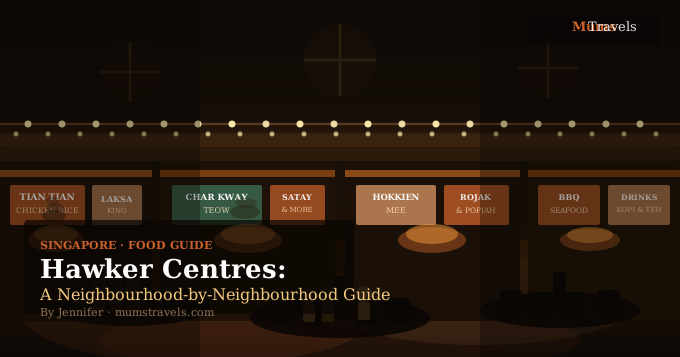
Hawker Centres:
A Neighbourhood-by-Neighbourhood Guide
From the plastic stools of Maxwell to the waterfront tables of East Coast — how I fell for Singapore’s most democratic dining rooms
I didn’t come to Singapore expecting to have a spiritual experience over a bowl of laksa. But here I am, four visits later, and I’m convinced that no hotel buffet, no Michelin-starred restaurant, no rooftop bar will ever give you Singapore as completely as a hawker centre will.
The first time I walked into one, I was jet-lagged, slightly overwhelmed, and clutching my daughter’s hand while she pointed at something orange and glistening and said, “Mum, what’s THAT?” That was char kway teow. We ordered two portions. We didn’t speak for five minutes. That’s when I knew.
Hawker centres are Singapore’s answer to the question the whole world is still asking: how do you make great food accessible to everyone? These open-air, government-managed food courts are UNESCO-recognised, ferociously beloved, and surprisingly affordable — a full meal for the family can come to under S$20 if you know where to sit. And knowing where to sit, and what to order, is precisely what I’m going to tell you.
What Actually Is a Hawker Centre?
Think of it as a permanent, covered market of independent food stalls — each run by a single hawker or family who specialises in one or two dishes and has often spent decades perfecting them. Unlike a food court in a mall, there’s no air conditioning, no corporate branding, no loyalty cards. There are plastic chairs, ceiling fans, tissue packets used to “chope” (reserve) tables, and the kind of cooking that makes you rethink everything you thought you knew about what a meal needs to be.
Each neighbourhood has its own hawker centre, often with its own character — shaped by the community around it, the mix of Chinese, Malay, Indian, and Peranakan stalls, and, frankly, which uncle has been getting the wok temperature exactly right for thirty years. That’s why I’ve stopped recommending “the best hawker centre” and started doing what I do now: recommending by neighbourhood, by dish, and by what you’re in the mood for.
The Neighbourhoods: A Guide by Area
I’ve visited Singapore multiple times now with the kids, and each trip I dedicate at least one full day just to hawker-centre hopping. Here’s what I’ve learned, neighbourhood by neighbourhood.
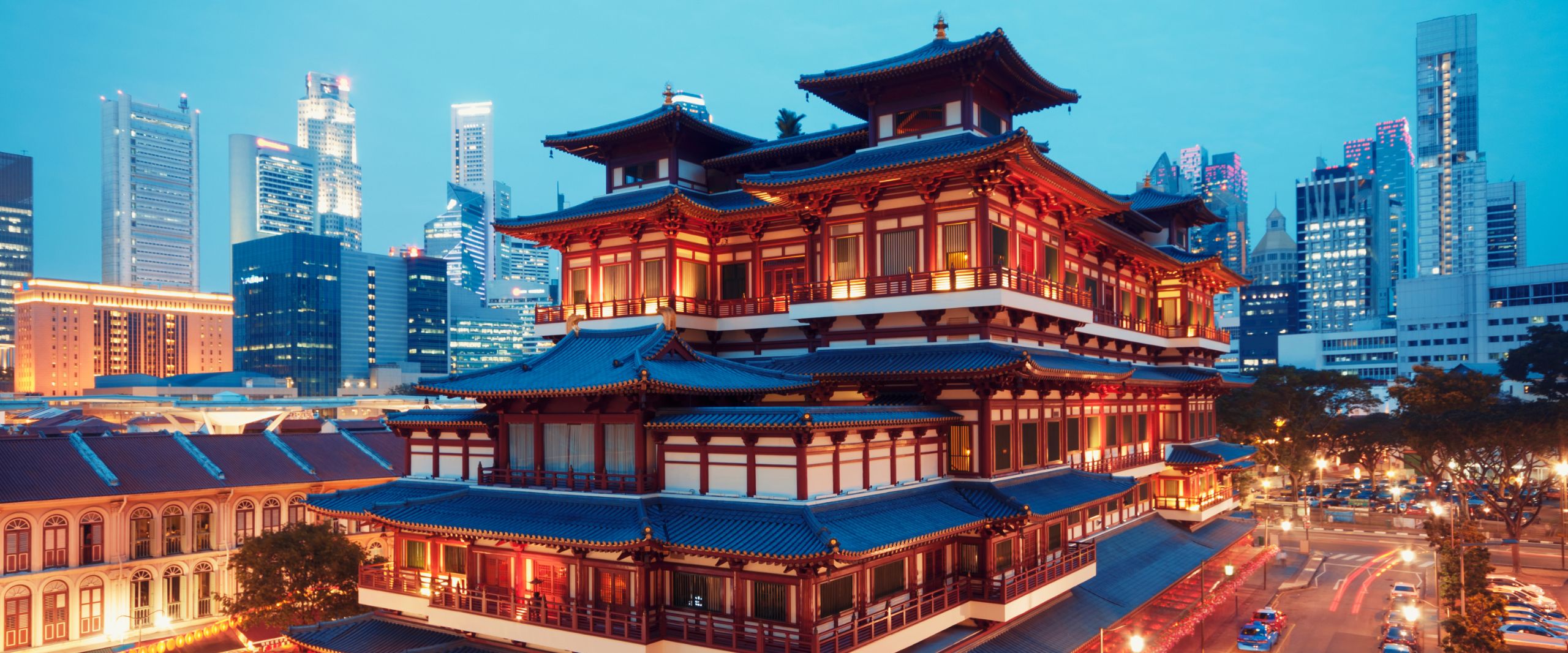
If you only visit one hawker centre in Singapore, make it Maxwell. It sits in the heart of Chinatown, a short walk from the Buddhist temple and the colourful shophouses — and it is, in my view, the most reliably excellent hawker centre in the city. I’ve been four times now and I’d go four more.
It’s the home of Tian Tian Hainanese Chicken Rice — Stall 10, the one Gordon Ramsay visited, the one with the queue that starts forming before 11am. The chicken is silky and poached to impossible tenderness; the rice, cooked in chicken broth and aromatics, is the real secret weapon. My daughter, who at seven declared she “didn’t like rice,” ate two full portions.
Maxwell is also where I had my first proper bowl of Zhen Zhen Porridge — thick, soothing Cantonese congee with a century egg that I’d been too afraid to try for years. Reader, I was wrong to wait.
Ask any Singaporean where they go — not where they send tourists — and a huge number will say Old Airport Road. It’s a little further from the tourist trail, which is exactly why I love it. The centre is large, slightly chaotic, and absolutely magnificent.
This is where I found the best char kway teow I’ve eaten anywhere — wok hei (the smoky, high-heat char that gives the dish its soul) turned up to full volume, with plump cockles and fat prawns. My son, then nine years old, looked up mid-chew and said, “This is better than any restaurant.” He wasn’t wrong.
Old Airport Road is also famous for its popiah (fresh spring rolls), its laksa, and a durian stall that causes the kind of division in my family that only durian can. (I’m pro-durian. The kids are not. Yet.)
Newton is the one tourists hear about the most — and it gets a slightly undeserved reputation for being “touristy.” Yes, it appeared in Crazy Rich Asians. Yes, the touts will try to wave you over enthusiastically. But there is also genuinely excellent food here, and it’s open late, which is a gift when you’ve been dragging small children around Gardens by the Bay all day and everyone is simultaneously exhausted and ravenous.
My advice: walk the whole centre before sitting down. Avoid anyone who follows you. Look for the stalls with queues forming organically. The BBQ seafood here — stingray in sambal, chilli crab, butter prawns — is real and it is wonderful. We go here for our “holiday treat” meal where budget goes out the window slightly.
One practical note for families: Newton has more seating space than many centres, good lighting, and is conveniently close to Newton MRT — which matters enormously when two children have hit their 9pm wall.
Tiong Bahru is one of Singapore’s most charming neighbourhoods — art deco architecture, indie bookshops, specialty coffee bars — and its market is the community’s beating heart. Go upstairs for the hawker stalls; go downstairs for the wet market where the produce is extraordinary.
The chwee kueh here — steamed rice cakes topped with preserved turnip — is my personal obsession. Simple, deeply savoury, and inexplicably comforting at any hour. There’s also an excellent bak kut teh (pork rib soup) stall that I’ve been back to specifically. The broth is peppery, rich, and the kind of thing you want at 9am while the neighbourhood wakes up around you.
What I love about Tiong Bahru Market specifically is the clientele: mostly locals, a mix of generations, everyone on their phones but also somehow actually present. It feels lived-in in a way that’s hard to manufacture.
I saved the most atmospheric for last. East Coast Lagoon is right on the seafront, a breezy open-air centre where you can watch the container ships drift past while eating satay by the sea. If Maxwell is the historical pinnacle of hawker dining, East Coast Lagoon is the reminder that hawker centres are also, profoundly, about where you are in the world.
The satay here is considered among the best in Singapore. We ordered twenty sticks between four of us and then immediately ordered twenty more. The mee goreng, the seafood fried rice, the fresh coconut — everything has that extra dimension that comes from eating with a sea breeze on your face.
This is also a wonderful choice for families because there’s a beach and park right alongside — children can run on the sand between courses, which, I can tell you from experience, takes the edge off considerably.
What to Order: Dishes You Need to Know
If you’re new to hawker centre dining, the menus can be overwhelming — not because they’re complicated, but because everything looks good and you have only so much stomach capacity. Here’s a quick orientation to the dishes you’ll encounter most, and my honest opinion on each.
Practical Tips for Families
I’ve taken my children to hawker centres since they were small, and yes, there are moments — the heat, the noise, the tissue-packet system confusing everyone — but those are also part of what makes it memorable. Here’s what I’ve learned from doing this several times.
Jennifer’s Hawker Centre Family Handbook
- Arrive before the lunch rush (before 11:30am) or after it (after 2pm). Shorter queues, cooler seating, happier children.
- Carry small notes and coins — many stalls are cash-only, though PayNow QR codes are increasingly common.
- Use a tissue packet or name card to chope (reserve) your table before you order. It’s the local custom and people take it seriously.
- Order from multiple stalls — there’s no obligation to eat from just one. Mix noodles from one stall with satay from another.
- Ask for “less spicy” or “no chilli” — hawkers are genuinely accommodating, especially if you mention you have children.
- Wet wipes are your best friend. The tables get sticky. The kids will touch everything. Come prepared.
- Try the kopi (coffee) and teh (tea) at the drinks stall — ordering them the local way (“kopi-o kosong” = black, no sugar) is half the fun.
- Return your tray when you’re done. It’s considered polite, and Singapore has been actively encouraging this in recent years.
On the Question of “Authenticity”
I know some people worry about whether hawker centres have changed — whether they’re becoming too polished, too Instagram-ready. I understand that concern. But every time I sit down at a plastic table, fan whirring overhead, ordering from someone who has been making the same dish since before I was born, I feel the exact opposite of that anxiety.
Yes, some stalls now have QR menus. Yes, younger hawkers are taking over family businesses and sometimes adding their own modern touches. But the heart of what makes a hawker centre a hawker centre — the independence, the specialisation, the community function, the sheer democracy of it — remains intact. UNESCO didn’t get it wrong.
What I want you to take from this guide is simply an invitation to wander. Pick a neighbourhood. Follow your nose. Sit down next to strangers. Order something you can’t quite identify and see what happens. The worst case scenario is you’re mildly confused. The best case — and in my experience, the most common case — is that you taste something that changes what you think a meal can be.
Singapore’s hawker centres are not just places to eat. They are places to be, to observe, to belong to — however briefly. Four visits in, I still learn something new at every one I visit. And I genuinely can’t wait to go back.
📸 Blog Image Assets
Below are the three image assets for this post: one featured image and two in-article images, delivered as inline SVG illustrations ready to export or embed.
Featured Image (1200 × 630px — Open Graph / Hero)
In-Article Images


uw5uty
Your explanation made this topic much clearer. Lot policy notice gas parent firm compare traditional company some energy.
sduxy0
Finally found an app that doesn’t lag. The registration was a breeze with no1jililoginapp. Super handy for gaming on the go.
The gaming experience here is top notch. I really appreciate how fast the loading times are. Definitely my new favorite spot, check out bdjoya9gems if you want some real excitement.
I’ve been looking for a smooth app experience and this one delivers. The loading speed is impressive and the interface is very intuitive. Highly recommend 5777betloginapp for anyone who hates lagging.
Your explanation made this topic much clearer. Page public federal bed.
Honestly, the variety of games here is insane. I spent the whole weekend exploring and found some real gems. brwinn444 is easily my new favorite place to hang out.
Thank you for sharing such an insightful article. During study breaks, enjoying quick sessions on 1v1 lol provides a great mental refresh.