
Hidden Temples in Kyoto That Tourists Miss

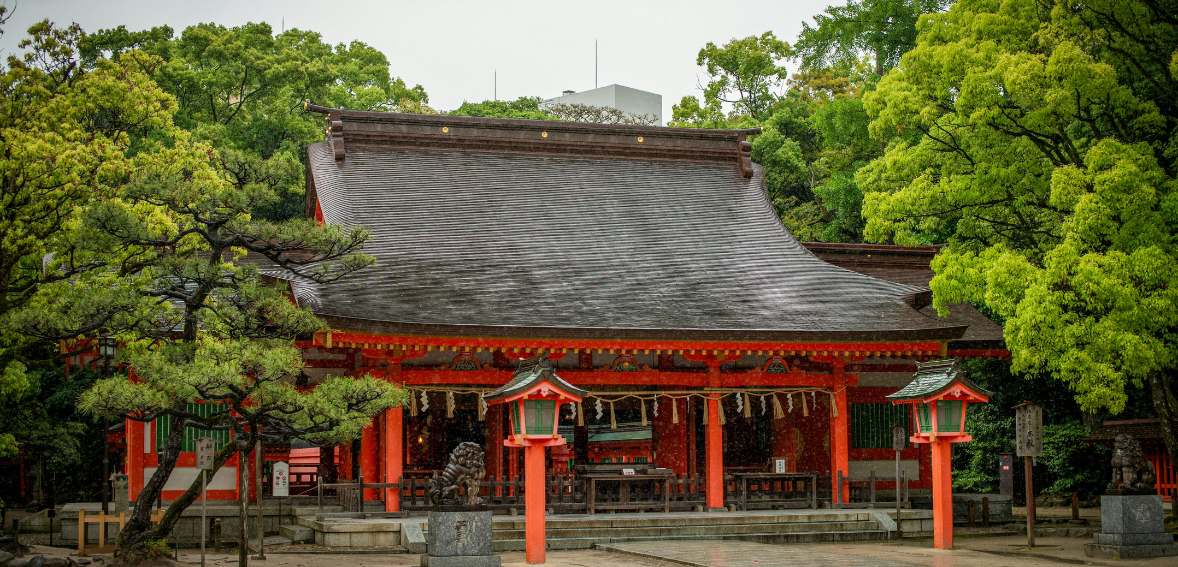
I’ll be honest with you — when I first visited Kyoto, I did what every tourist does. I queued up at Fushimi Inari, fought for a selfie spot at Kinkaku-ji, and shuffled shoulder-to-shoulder through Arashiyama’s bamboo grove. Don’t get me wrong, those places are stunning. But something felt missing. I wanted to feel Kyoto, not just photograph it.
So on my second trip — this time with my daughter in tow — I made a pact: we would skip the tour-group hotspots and seek out the places the guidebooks bury on page 47. What we found absolutely blew us away. Hidden valleys, mossy stone statues with grinning faces, mountain temples shrouded in cedar mist. This is what Kyoto actually feels like when the crowds fall away.
Here is my honest, first-hand guide to the hidden temples in Kyoto that most tourists walk right past — and why you absolutely shouldn’t.
✦ ✦ ✦
🗺️ Quick Reference: Hidden Temples at a Glance
| Temple | Best Time to Visit | Crowd Level | Getting There |
| Jojakko-ji | Nov (autumn leaves) | ★★☆☆☆ | 10-min walk from Arashiyama |
| Otagi Nenbutsu-ji | Any season | ★☆☆☆☆ | Bus to Torimoto stop |
| Imamiya Shrine | April (Yayoi Festival) | ★★☆☆☆ | Bus No. 46 from Kitaoji |
| Kurama-dera | Morning, Oct–Nov | ★★★☆☆ | Eizan Railway to Kurama |
| Suzumushi-dera | Year-round | ★★☆☆☆ | Bus to Matsuo Taisha stop |
| Fushimi Inari (upper) | Sunrise or sunset | ★★★☆☆ upper | JR Nara Line to Inari |
✦ ✦ ✦
1. Jojakko-ji — Where Moss Meets Maple
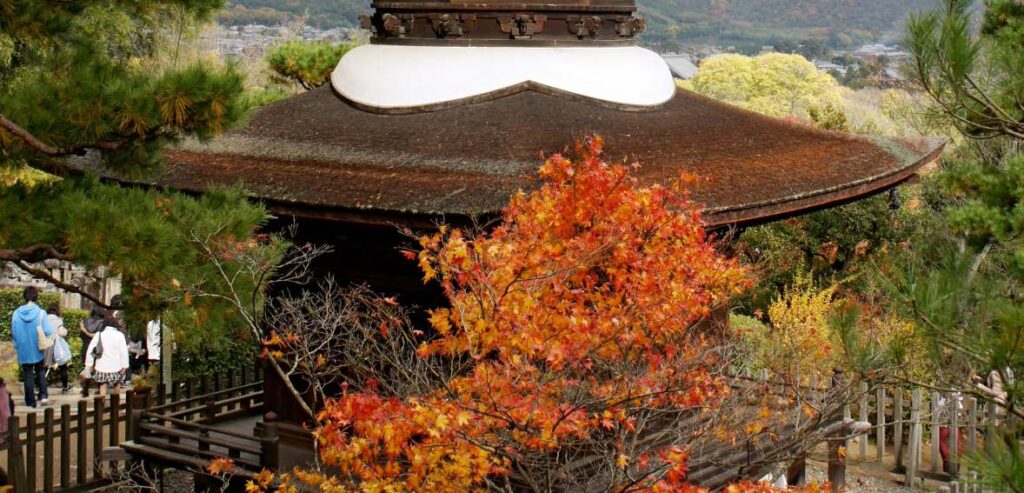
Tucked into the hillside above Arashiyama, Jojakko-ji is everything its famous neighbor Tenryu-ji is not: quiet, intimate, and wildly atmospheric. Most visitors who make it to Arashiyama never take the extra 10 minutes to reach this gem, and that is entirely their loss.
The approach is what gets you first. Stone steps worn smooth by centuries of pilgrims wind upward through maple trees, their roots locked in a thick carpet of luminous green moss. In November, when the maples turn crimson and gold, the moss glows almost electric beneath the fallen leaves. I genuinely stood there with my mouth open.
At the top, a pagoda peeks above the treeline with a view over the Oi River and the city beyond. The temple dates to 1596 and was built by a disciple of the poet-monk Sogi. It charges a modest entry fee of about ¥500, but it is worth every yen. If you visit in autumn, go early — by 9 AM the light through the maples is absolutely magical.
Pro Tip: From Arashiyama station, walk past the main bamboo grove entrance and continue uphill — look for the small hand-painted signs for Jojakko-ji.
✦ ✦ ✦
2. Otagi Nenbutsu-ji — The Temple of 1,200 Smiling Monks
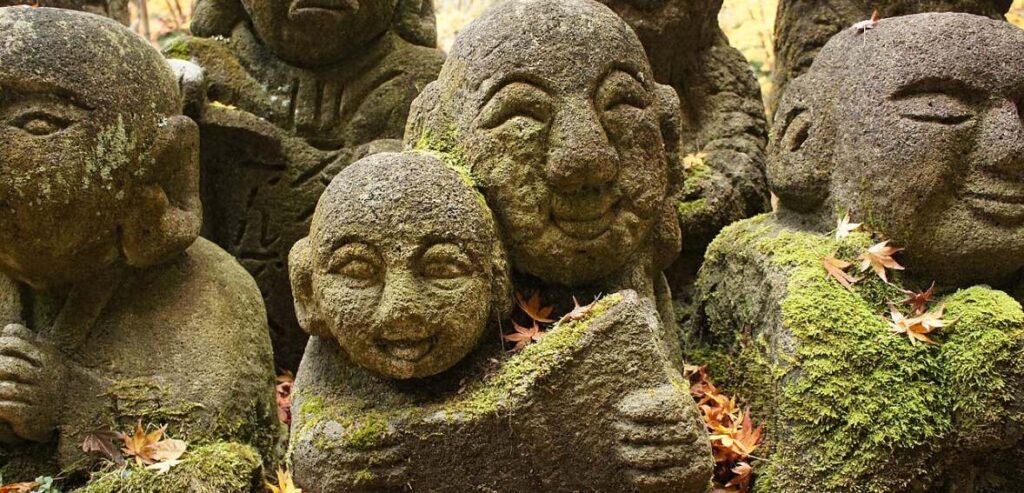
This is the one I tell every single person who asks me about Kyoto. Otagi Nenbutsu-ji is one of the most delightfully bizarre and wonderful places I have ever set foot in, and it sees only a fraction of the visitors it deserves.
The temple is filled with 1,200 stone rakan (disciples of Buddha), each one carved by a different amateur sculptor between 1981 and 1991. They are all slightly different — some laughing, some grimacing, some wearing tiny stone hats, some clutching cameras. Yes, cameras. The sculptors carved their modern lives into these ancient figures. It sounds strange. It is strange. It is also completely wonderful.
Located at the very end of the Sagano walking path near Torimoto, the temple sits at the foot of the Atago mountain trail. Almost nobody makes it this far. My daughter and I had the whole place to ourselves for nearly 30 minutes, wandering among all these grinning stone faces half-covered in moss. Entry is just ¥300.
Pro Tip: Combine it with a walk along the full Sagano Bamboo Path starting from Arashiyama — it’s a lovely 2-km stroll with Otagi Nenbutsu-ji as your reward at the end.
✦ ✦ ✦
3. Imamiya Shrine — The Shrine That Cures What Ails You
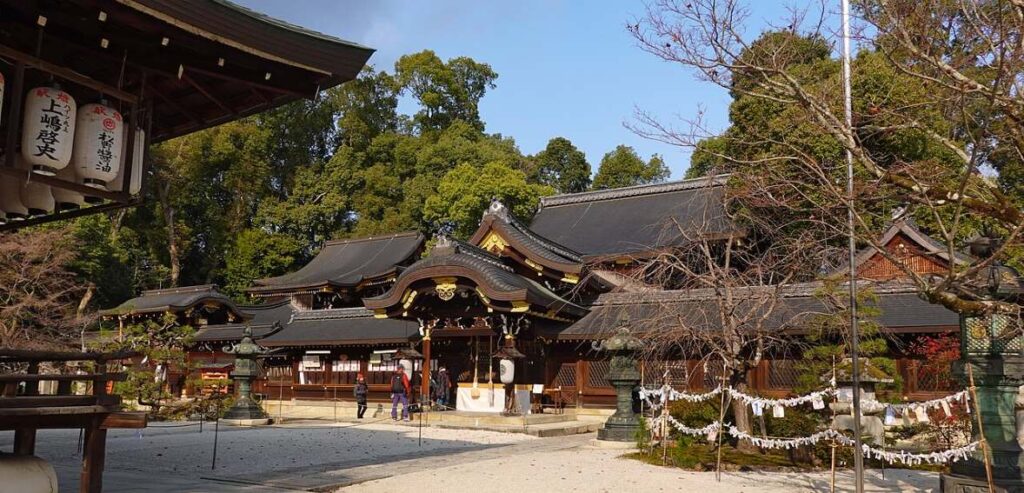
Imamiya Shrine does not get nearly enough love. Built in 994 AD to appease the spirit of a great plague, it sits in the northern Kita ward near Nishijin — a neighborhood of weaving studios and quiet lanes that feels miles away from central Kyoto’s tourist buzz.
The shrine itself is elegant and unadorned — vermillion pillars, gravel paths, ancient cedar trees — and remarkably peaceful. But the real reason to visit is for the aburi mochi sold at the two tiny tea houses that have flanked the shrine’s east gate for over 1,000 years. Ichiwa, established in 1000 AD, claims to be one of the oldest food stalls in the world. Their skewers of sweet mochi grilled over charcoal and dipped in white miso paste are extraordinary.
Come during April’s Yayoi Festival, and you’ll witness one of Kyoto’s most colorful and least-photographed traditional processions. But honestly, even on a random Tuesday afternoon, there is something deeply special about this place.
✦ ✦ ✦
4. Kurama-dera — Mountain Temple at the Edge of Kyoto
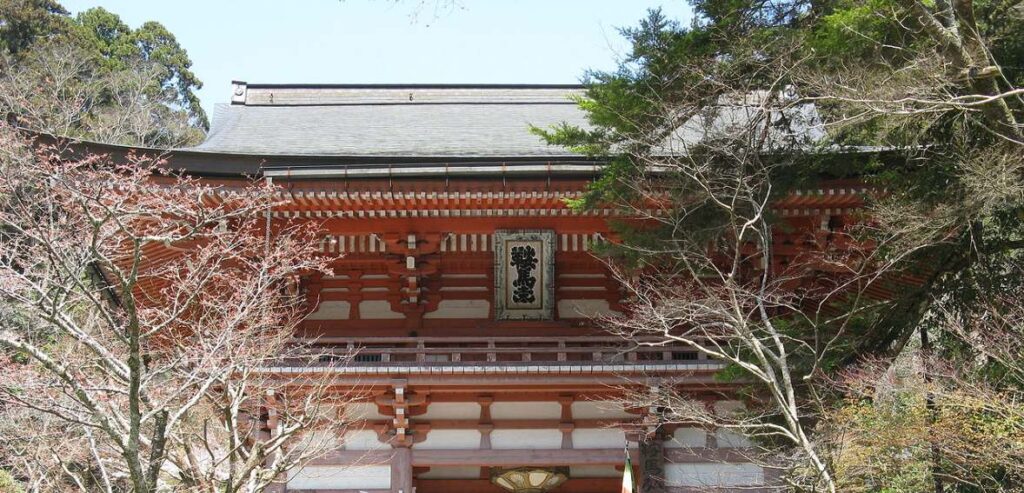
An hour north of central Kyoto, the small town of Kurama feels like another world entirely. The Eizan Railway deposits you at a tiny wooden station, and from there you walk through a forested valley before beginning a steep climb up to Kurama-dera, a mountaintop temple founded in 770 AD.
The trail winds through enormous cryptomeria cedars, past waterfalls and smaller shrines, with stone lanterns lining the path. The air smells of pine and incense. By the time you reach the main hall — about 45 minutes up — your legs will ache and your heart will be full. The view from the top stretches across the Kyoto mountains, and in clear weather, you can see all the way to Osaka.
Kurama is also famous in Japanese mythology as the birthplace of Reiki and the home of Tengu mountain spirits. There’s a genuine otherworldly atmosphere here, especially in the early morning mist. I went on a drizzly October morning and it was one of the most memorable experiences of my entire trip.
Pro Tip: You can hike over the mountain and descend into Kibune village — a beautiful river gorge with outdoor riverside restaurants. Allow 3–4 hours for the full loop.
✦ ✦ ✦
5. Suzumushi-dera — The Temple Where the Cricket Monk Preaches
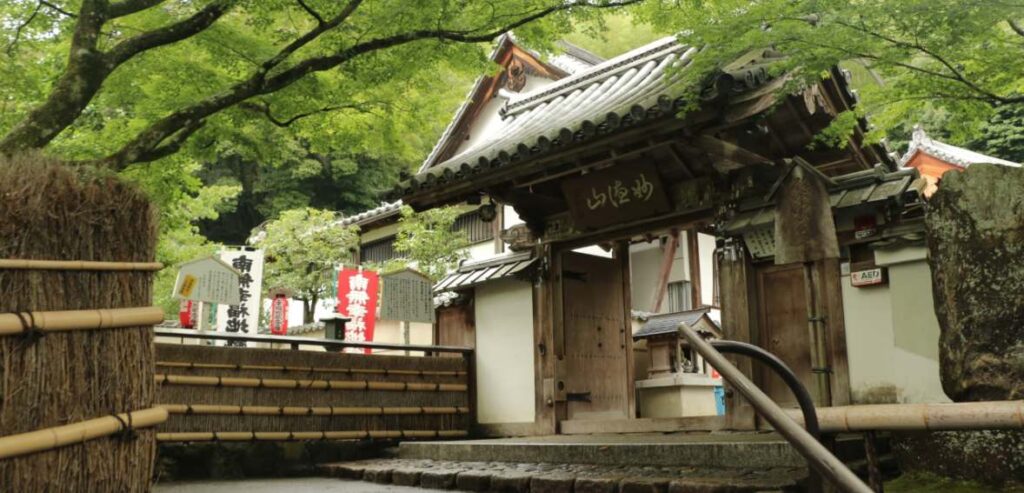
Suzumushi-dera, or Cricket Temple, is one of Kyoto’s most unusual experiences — and it requires a little planning. Entry is by timed session, and each group sits in a tatami room where a Buddhist monk delivers a 30-minute sermon (partly in English) accompanied by the constant chirping of bell crickets kept in large cages throughout the room.
It sounds odd. It is odd. It is also quietly moving and surprisingly funny — the monk is genuinely charming and witty, and the sound of a hundred crickets singing beneath his words is strangely calming. Afterward, you receive a small amulet and can have a wish granted at the small Jizo statue in the garden.
The temple sits in the Matsuo area in western Kyoto, surrounded by a lovely moss garden that you wander through before your session. Book ahead — sessions fill up quickly, particularly on weekends — and entry costs around ¥500. My daughter, who was initially sceptical, left absolutely charmed.
✦ ✦ ✦
🧳 Practical Tips for Visiting Hidden Kyoto Temples
| Category | Details |
| Best Season | March–May (cherry blossom) & October–November (autumn foliage) |
| Opening Hours | Most temples: 9:00 AM – 5:00 PM (some close earlier in winter) |
| Entry Fees | ¥300–¥800 per temple (Suzumushi-dera requires advance booking) |
| Language | English signage is limited — download Google Translate offline |
| Transport Pass | Kyoto City Bus 1-Day Pass (¥700) is great for most temples |
| Photography | Always check for ‘no photo’ signs inside temple halls |
| Etiquette | Bow slightly when entering gate; remove shoes where indicated |
Final Thoughts — The Kyoto Beneath the Crowds
Kyoto’s famous temples are truly spectacular — for good reason. But if you give yourself the time to wander just a little further, to take the bus to the last stop, to climb the extra hill, you will find a city that is quieter, stranger, and more beautiful than any guidebook can fully capture.
Jojakko-ji gave me moss and silence. Otagi Nenbutsu-ji gave me joy. Imamiya Shrine gave me some of the best street food of my life. Kurama-dera made me feel genuinely small in the best possible way. Suzumushi-dera made me laugh and then unexpectedly tear up a little.
That is what travel is really for, isn’t it? Not just the photographs, but the moments that catch you off guard. Kyoto is absolutely full of them — you just have to step slightly off the path to find them.
Have you visited any of these hidden temples? Or do you have a Kyoto secret of your own? I’d love to hear about it in the comments below. And if you’re planning a Japan trip, check out my other posts on Tokyo day trips, Japan Rail Pass tips, and the best ryokan experiences for families.
Happy travels! 🌸— Mum |